Monday, January 31, 2011

농부장터 / The Farmer's Marketplace

Do you ever get jealous of your friends back home? Not the ones still living in the same old town working some boring desk job, but the ones who look forward to twice-weekly farmers' markets in the spring and a box of fresh CSA veggies delivered right to their doorstep every other Thursday? Have you ever been frustrated by HomePlus's miniscule organic section, crammed back into one corner next to the Kraft salad dressings? And have you noticed that the organic produce fades seamlessly into the standard, so that it's hard to be sure which is which?


If such things frustrate you, consider visiting 농부장터 (The Farmer's Marketplace), located near the Dongchon-dong Community Center (동천동 주민센터) in Chilgok Residential District 3 (칠곡3지구). Managed - though he insists that he doesn't own it - by Mr. Kim Gi-su, the Nongbu Jangteo is perhaps the closest thing you'll find to a CSA in Gyeonbook province, carrying a variety of products from environmentally-friendly farms, communities, and collectives of various sorts. Mr. Kim guarantees the producers that he'll purchase a certain percent of their output and pays them in advance, then passes whatever he receives on to those who visit his shop.

Products for sale include:

Different varieties of rice (white, brown, mixed grain)
Different varities of pulses (red and green peas, split and whole)
Other grains (barley, popcorn kernels)
Noodles (white, whole wheat, sweet potato, thick, thin)


Standard "Korean stuff" (soy sauces, sesame oils, pepper pastes, bean pastes, seaweeds)
Nuts (raw and roasted peanuts, walnuts, pine nuts)


Household products (loofa sponges, dish soap, multi-purpose cleaner)
Hygiene products (soaps, shampoos, lotions)


Prepared foods (dumplings, snacks, cookies, crackers, jams)
Various types and cuts of meat, eggs, and milk.
Drinks (rasperry wine, plum wine, Korean grape wine, juice do-it-yourself makkeoli kits)


And, let's not forget, seasonal fruits and vegetables. Potatoes, sweet potatoes, pumpkins, lotus roots, garlic, onions, apples, persimmons, jujubes, pears, tangerines, and who knows what else. All organic or low-pesticide or pesticide-free or locally grown or processed! Money spent at Nongbu Jangteo either stays in the community or goes to support someone not too far away doing their best to serve both us and the dirt at the same time.

In addition to selling all this great stuff, Mr. Kim works hard to connect city-dwellers like ourselves to the farmers and land we depend on. When the season is right, customers can accompany Mr. Kim to meet and work with some of the farmers who provide the store's stock. He also organizes field trips to farms for elementary schoolers to teach them about where their food comes from and how it's made. Come spring, DGL hopes to go along!

So, if you're interested in healthy food, healthy land, healthy people, and healthy communities, drop by and support a responsible local business.


Address: Daegu, Buk-gu, Dongcheon-dong 932-1
Landmarks: Daedong bridge, Dongcheon-dong Community Center.
15 minutes on foot from Chilgok HomePlus or 7Valley.
Buses: Buk-gu 1 to Dongcheon-dong Community Center; 726 to Hwaseong Central park; 708 to Nonghyeop Buk-gu Jiso
Hours: Daily, 09:00-22:30
Website: http://gangbook.kr/
Email: Nongbutmart@yahoo.co.kr
Phone: 053-421-0909

View Larger Map

Wednesday, January 5, 2011

Our first magazine article!

Noksaek Sari is proud to announce that it has officially left the internet for the first time! (That is, not counting the hours spent digging around at the garden and watching Eco-Films at Buy the Book.) Daegu Pockets has included a stepped up version of Noksaek Sari's review of the Suseong-gu Organic, mostly-Veg buffet IPPL in its January issue. Have a look:


You can download the whole magazine for free at www.daegupockets.com/pdfs/Jan2011.pdf.

Coming up in the March issue will be an article about Ecobike, the organization behind Daegu's monthly 대행진 (Grand Bike Parade). Keep your eyes peeled.

Sunday, December 12, 2010

"What the hell are we supposed to do with all our trash?"

is one of the first questions bewildered waygooks ask themselves after cozying into a new one-room, loading it with E-mart necessities, and trying to figure out what to do with the heap of paper and plastic in the corner. You could live here for 10 years and not know the answer. A brief walk around just about any part of Daegu or its suburbs will reveal that there's no one way to do it; some use city bins, others use city bags, and others just use the city itself. What should you be doing? Should you mix it all together and tie it up tight? Should you make the effort to sort it yourself? Should you leave it loosely bound so that some wandering grandma can sift through it for recyclables?

Before answering these questions as I thoroughly as I can, I'd like to give a few general tips:

Throwing anything out, while unavoidable, should be a last resort. The first and most important step to reducing the amount of waste we leave behind is to reduce the amount of waste we take in. This may mean carrying around our own shopping bags; having ziplocs on hand for produce; using a reusable water bottle; eschewing delivery in favor of eating out or cooking; buying fewer processed foods; avoiding mid-size "marts," where many fruits and vegetables come wrapped in plastic and styrofoam (head instead to a street market, a big traditional market, or even a megastore); dumpster-diving in front of apartments (great for glass jars!); sharing with friends who live nearby; buying used goods whenever possible; and making everything you have go that extra mile.

After that, make sure to donate or resell anything useful rather than throwing it out. There are always needy waegookins who will be happy to take things off your hands when you move out, and there are also lots of used furniture markets (Ch'ilseong, for one) that will gladly take and re-sell your furniture. Buy the Book runs a monthly "swaporama" flea market, and the Beautiful Store (more info around this site) will accept most donations.

Then, if you really have to throw stuff out:

_______________________________________________________

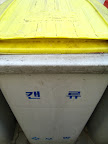
Do your best to sort and recylce. If you're lucky enough to live in an "Apateu," things should be pretty clear. You may have bins that look like this, which tell you where to put what:


The good news is, even if you don't have the bins, your landlord is probably paying someone to come pick up your garbage every so often. You can sort it just as if you had your own bins. Separate different varieties of recyclables into different plastic bags, and make sure that the contents are visible so that the workers can handle them properly. Here are the details:


PAPER / 종이:
-Newspapers (please tie into bunches less than 30cm thick)
-Books, notebooks, paper shopping bags, calendars (please remove plastic coverings, notebook springs, etc before disposal)
-Milk and juice boxes, paper cups (please dry before disposal)
Boxes (snacks, pizza and chicken boxes, corrugated cardboard).
**NO toilet paper or tissues - these go with the normal trash.

PLASTIC / 플라스틱:
-PET bottles (beverages, beer, water, soy sauce)
-PE (big bowls, baskets)
-Synthetic resins (shampoo bottles, detergent containers, "yagurt" bottles, Yoplait containers, Bulgaris bottles, makkeoli bottles, etc)
-Big bowls (Rubber flower pot type things)
-Fertilizer sacks, PVC pipes, styrofoam.
-Anything that has a PET, HDPE, LDPE, PP, PS, PVC, or OTHER recycling logo.

GLASS (Bottles)/ 유리(병):
-Beer, Soju, soft drinks, other drinks, etc
**PLEASE remove bottle caps, and please don't stick cigarette butts in.
**PLEASE be careful not to break any glass, or to mix broken glass in with other trash.

CANS (Iron, Aluminum) 캔 (철, 얼미늄):
-Iron and aluminum (ones used for food and beverages)
-Other cans (Butane gas cans, pesticide cans).
**PLEASE crush cans before disposal. If the can is pressurized, poke a hole in it first. Tabs can be placed inside the can.

METALS / 고철:
-Scrap iron (tools, iron plates)
-Non-ferrous metals (nickel-silver, stainless steel, wires, aluminum, window sashes)

**PLEASE wrap items up to prevent them from mixing.
**You can disassemble umbrellas, chairs, etc and recycle the metal parts.

CLOTHING / 의류:
-Clothing
-Other non-clothing items (carpet, leather bags, dress shoes, blankets and comforters, diaper covers)
**Items too large for the bin should be placed in bags or tied up. Buttons, zippers, etc should be bagged and kept separate.


VINYL (PLASTIC BAGS) / 비닐:
-Single use plastic bags. This includes the black plastic bags you get when buying food on the street as well as the clear bags you get when buying fruit and vegetables in the stores. It also includes the plastic that's used to secure fruits, vegetables, and sides dishes to styrofoam plates.
-Ramen bags, snack bags, etc.
**Before disposal, please put all your small bags into bigger plastic or paper bags so that the wind won't scatter them.

FOOD / 음식물 쓰레기:
Everything EXCEPT bones and shellfish shells.

Used Cooking Oil / 폐식용유
Can go in bins that look like this:


Batteries / 건전지
Can go in bins that look like this:


Appliances, electronics, furniture, and other big stuff:
- Strongly consider donation, if feasible.
- If not, visit the apartment office and tell them what you need to toss. They'll look up the disposal fee (usually around 5,000 won), and once you've paid it, you can attach a sticker to the item in question and leave it outside. A third party will come to pick it up; there's no telling where it'll go.

Stuff that you really have to throw out:
- Can be tied up in city disposal bags, which look like this:


You can purchase them at many small "supers," most mid-size "marts," and at the big stores as well, in various sizes . They're cheap and usually come in packs of five or ten.

In case you're wondering what this bag says:

1. After filling the bag with your trash and tying it up, you may leave it on the street for pick-up between 8PM and 1AM.
2. As there is no trash pick-up on Sundays, please don't leave bags out on Saturday.
3. If you fail to use a city bag to dispose of your waste, you may be fined up to 1 million won.
4. So that the contents of bags of recyclables can be easily distinguished, please use clear bags or sort them yourself.
5. You may be fined for disposing of food waste in this bag. To dispose of food waste, please use designated food waste bags. [Usually available at the same locations.]


Useful language:
When throwing stuff out:
Where should I put this? 이건 어디에 넣으면 돼요?
Can this be recycled? 이건 재활용이 돼요?

When trying to avoid accumulating plastic bags while shopping:
Please put it in here [hold out your reusable bag]. 여기 넣어 주세요.
You don't need to give me a plastic bag. 비닐 봉지를 안 주셔도 돼요.
I have my own bag. 전 봉지를 갇고 있어요.
I hate plastic. I'm begging you, please don't give me a plastic bag. 전 비닐 싫어요. 비닐 봉지를 제발 주지 마세요.
Thank you for understanding. 이해해 주셔요 감사합니다.

When looking for city trash bags:
Do you sell trash bags? 쓰레기 봉투를 팔아요?
Do you sell food waste disposal bags? 음식물 쓰레기 봉투를 팔아요?


Resources:
The Story of Stuff - A brief video (actually, a series) about the relationships between trash, recycling, consumerism, the environment, and our health.

Garbage Land: On the Secret Trail of Trash
- Elizabeth Royte's quest to find out where an average American's waste ends up.

"Full-of-happiness Bokhyeon Woobang Town's Recyclable Item Separation and Disposal Notice." featuring implorations such as "We kindly request your assistance in helping us becoming a rule-abiding Woobang Town."(In Korean) - Page 1 and Page 2

Thursday, November 25, 2010

Eco-film Night #5 - Dirt! The Movie


Chances are it's been a few years (or decades) since you looked at dirt as anything other than something to avoid dragging into your apartment. As children, we love getting coated in the stuff; as adults, all we can think about is keeping away from it.

But dirt feeds us and gives us shelter. Dirt holds and cleans our water. Dirt heals us and makes us beautiful. Dirt helps regulate the earth's climate. Dirt is the ultimate natural resource for all life on earth. Nonetheless, contemporary agricultural and industrial practices are quickly degrading and destroying this fundamental piece of our planet.

"Dirt! The Movie" offers a vision of a sustainable relationship between Humans and Dirt through profiles of the global visionaries who are determined to repair the damage we've done before it's too late. There are many ways we can preserve the living skin of the earth for future generations. If you care about your food, water, the air you breathe, your health and happiness, come join us!

As always, entrance is free and any and all are welcome. Come early for a meal, stay late for a chat, or both.

Date: Sunday, December 12th
Time: 7:30-9:00PM
Where: Buy the Book, Rodeo Street, Downtown Daegu


Tuesday, November 9, 2010

The End of the Teot-bat (FOR NOW)

I returned to the field the other day, dismayed to see that the cold had taken its toll on the sesame leaves and basil. All was wilted, and most was eaten by bugs. There were a few pleasant surprises though.

For instance, here we see that as late as late October, cherry tomatoes are still growing.


Being a novice, I didn't realize how much staking and stringing the little guys need, so most of the fruits had fallen to the ground. Nonetheless, it looks like one made it to fruition while on the vine. Success! Even the big tomato plant, which only bore one or two tomatoes throughout the summer, had some big, green fist-sized ones on the vines.

Hrm, something is amiss:


Who is that lurking in "my" garden?


A real live rabbit, enjoying some rotten sesame leaves and my neighbor's fairly healthy-looking pepper plants. I found it odd that the little critter preferred the peppers to my carrots. A true Korean rabbit, I suppose.


Yours truly, hard at work. Speaking of carrots:


I didn't weigh them, but I'm guessing it came out to about 4 kilos. Pretty good for one inexpertly-planted row. Enough for 2 weeks of carrot and cilantro soup!

The weather is cold enough that nothing else will grow - the mint, basil, sesame leaves, green onions, chives, tomatoes, and pumpkins are all on their last legs. Plus, I wasn't motivated enough in the early autumn to plant any winter greens or radishes. Thus, there's nothing left to be done at the Teot-bat until sometime next spring. Rabbit friends, you have my permission to eat any and everything; all I ask is some fertilizer in return.

Saturday, November 6, 2010

The Teot-bat Pays Off!

After several months of ceaseful, effortless cultivation, the beloved Teot-bat has finally delivered. Of course, I had snagged a cherry tomato or two and a few fistfuls of mint leaves and basil in the past, but now, apparently, the combination of the late-August rains and the cooler weather of September has led to some truly monstrous growth.


Basil and Sesame leaves, each about a meter high. Some nice green onions on the left, too.


Some truly beautiful Cilantro/Coriander, Chocolate Mint, and Thyme:


!A CARROT ERUPTION!:


Better pick that Okra, too:


(Actually, it was already too late for the Okra. Mathan, my excellent Indian neighbor, tells me I should have picked them when they were still soft.)


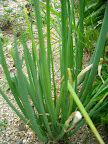
Chives and Green Onions:


Harvested: Green Onions, a sickle, and 1/3 of a shoe.


Also harvested: basil, a carrot, and 2 ziploc bags
Align Center

Daegu NoksaekSari Organic CSA Distribution Complex:


THIS IS THE WHY:


A pumpkin, chive, and green onion pancake.

Thank you, Teotbat.

Sunday, October 24, 2010

Eco-Film Night: Our Daily Bread


When:
Satuday, 13 November, 8:00PM
Where: Buy the Book Cafe, Rodeo Street, Mr. Pizza Building, 4th Floor, Downtown Daegu

언제? 토요일 11월 13일, 8:00PM.
어디? Buy the Book Cafe, 로데오 거리, Mr. Pizza 빌딩, 4층


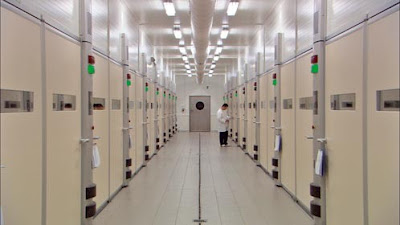
Noksaek Sari hereby invites you, your friends, your friends' friends, and anybody else you know who happens to eat food, to join us for our fourth Eco-Film Night. We will be showing Nikolaus Geyrhalter's award-winning 2005 documentary "Our Daily Bread."

"Welcome to the world of industrial food production and high-tech farming! To the rhythm of conveyor belts and immense machines, the film looks without commenting into the place...s where food is produced in Europe: monumental spaces, surreal landscapes and bizarre sounds - a cool, industrial environment which leaves little space for individualism. People, animals, crops and machines play a supporting role in the logistics of this system which provides our society’s standard of living.

OUR DAILY BREAD is a wide-screen tableau of a feast which isn’t always easy to digest - and in which we all take part. A pure, meticulous and high-end film experience that enables the audience to form their own ideas."

As always, entrance is free. All are welcome to enjoy the movie, and if you're hungry, feel free to try a meal or snack from Buy the Book's healthy and Earth-friendly menu.

Hope to see you there!


대구녹색살이 당신, 당신의 친구들, 친구들의 친구들, 그리고 당신이 아는 모든 음식을 먹는 사람을 초대합니다! 우리의 4번째 친환경 영화상영에 참석하시길 바랍니다. 이번에는 Nikolaus Geyrhalter의 상을 많이 받은 2005년에 나온 다큐멘터리 "Our Daily Bread"를 상영하겠습니다.

OUR DAILY BREAD는 우리가 매일 먹는 산업의 음식물을 어떻게 만들었는지 객관적으로 보여 주는 다큐멘터리입니다. 보이지 않는 우리의 소중한 음식을 생산하는 기계와 시설, 장소와 풍경, 사람과 동물을 폭로합니다. 해석을 덧붙이지 않는 고급스럽고 세심한 연출이므로, 직접 보셔서 독립적으로 의견을 결정할 수 있을 겁니다. 매우 시각적인 영화라서 영어를 알아들 수 없어도 많이 배울 수 있을 겁니다.

늘 하던대로, 무료입장입니다. 영화만 즐기셔도 되고 만약에 배가 고프거나 목이 마르다면 Buy the Book의 친환경, 건강에 좋은 식사나 과자를 맛보세요.

곧 뵙겠습니다!


Visit the official website:

http://www.ourdailybread.at/jart/projects/utb/website.jart?rel=en